By Jānis Līcis, Head of Marketing at Paynt
UK tipping culture is changing. What was once seen as a discretionary gesture of appreciation has become a more visible part of the hospitality payment experience, particularly as optional service charges have become common, particularly among larger restaurant chains.
For some customers, the growing visibility of service charges and on-screen tipping prompts has raised concerns that UK hospitality is adopting a more American-style tipping culture. The UK has traditionally treated tipping as a personal choice, so any sense of expectation can feel out of place.
Whatever our personal preferences may be, there’s no doubt that factors such as tipping regulations and the digital payments revolution are changing the way customers choose to reward hospitality staff. For the industry and its millions of employees, this is a rare opportunity to improve the tipping experience for customers and staff alike.
Change is inevitable
Analysis of more than one million hospitality transactions made between June 2024 and February 2026 offers a revealing picture of how UK tipping habits are evolving. The main finding is that, during that period, the overall proportion of customers leaving a tip almost halved from 10.9% to 5.5%. Despite this reduction in tipping frequency, the average tip value almost tripled from £4.87 to £14.39, suggesting that customers who continue to tip are being more generous.
Tipping behaviour also varies considerably according to the day and time of a visit, suggesting that context plays an important role in their willingness to leave something extra. For example, Wednesday sees the highest tipping rate, while Thursday sees the highest average tip value, making midweek evenings particularly significant for those relying on gratuity income. In addition, the period between 7pm and 9pm consistently generates the highest average tip values, suggesting that the traditional dinner service slot remains key.
However, busier trading periods do not necessarily translate into greater gratuity income. Saturday generates the greatest volume of hospitality transactions, yet records one of the lowest tipping rates of the week.
The digital payments revolution
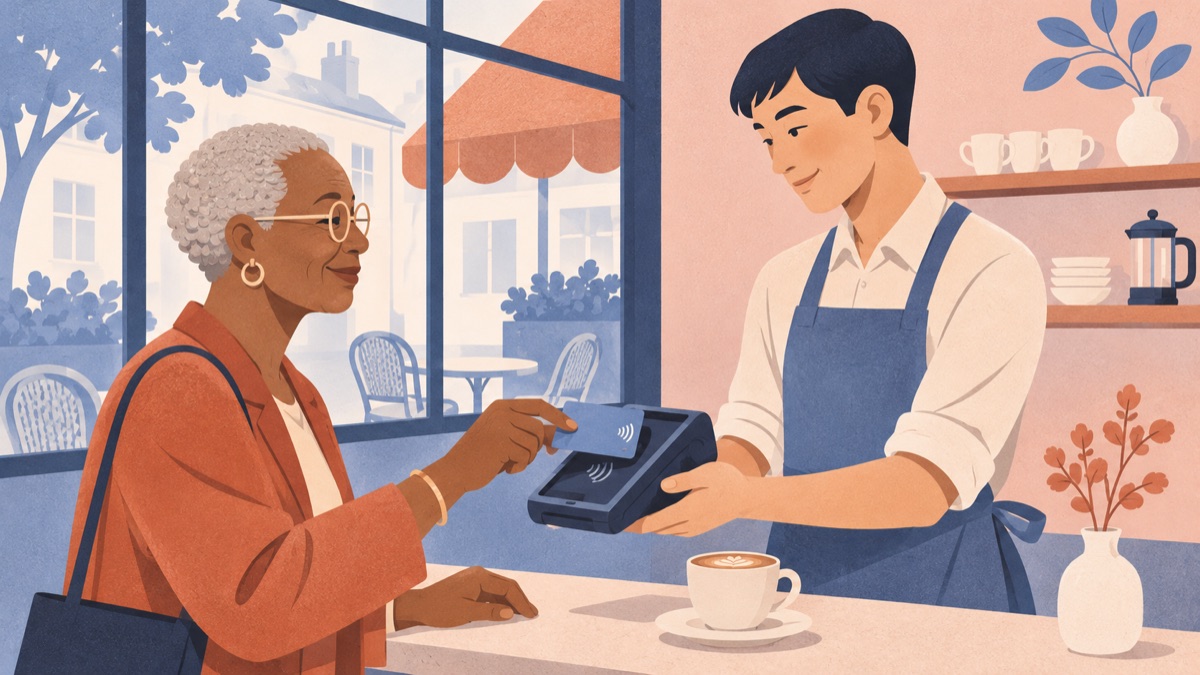
The way people pay tips is also subject to change, with contactless now accounting for nearly two-thirds (63%) of all hospitality payments – far and away the most common way customers choose to tip.
This might be very convenient for customers, but the problem is that contactless transactions also have the lowest tipping rate, at under 5%. By comparison, customers paying by chip-and-PIN leave a tip in nearly 15% of transactions – a huge difference.
This strongly suggests that the payment method itself influences customer behaviour, with different methods encouraging distinct behaviours and habits. It also has important implications for hospitality businesses because tipping no longer depends solely on the quality of service. Today, the payment experience strongly influences whether customers leave a gratuity.
Part of the reason for this is the impact of the Allocation of Tips Act in 2023, which was among the biggest formal revisions to UK tipping regulations in many years. Its headline rule change was that businesses are now required to pass on 100% of qualifying tips and service charges to staff.
The legislation is clearly well-intentioned and designed to improve fairness for hospitality workers, in contrast to the longstanding opaque culture that was open to abuse. However, despite the change in the law, consumer confidence remains relatively low, with more than half saying they do not trust restaurants to pass on 100% of tips to staff.
Implementation of the tipping law also appears to be inconsistent, with one quarter of employers reporting that they made no changes after the legislation came into force. Understanding of the legislation remains mixed among hospitality decision-makers, while 14% of staff say they do not believe their employer is complying with it.
The government’s recently announced consultation on revised tipping guidance reflects the fact that this remains an evolving area, with further work needed to build understanding and confidence. Where UK tipping culture goes next will be extremely important for hospitality businesses and their employees. The sooner everyone gets clarity, the better.
About the author

Jānis Līcis is Head of Marketing at Paynt, based in Riga. A marketing communications and advertising professional educated at the University of Latvia, he leads Paynt’s brand and communications across its European markets. He has showcased Paynt’s hospitality payment and tipping innovations at industry events, and he speaks on how collaboration between fintech and government is creating tangible outcomes for businesses and the wider economy.